
By: Idham Rizal, PPWI Inhil
1. Introduction: Context and Purpose of This Analysis- starbpknews.id
In recent years, Indonesia has seen a resurgence of public demonstrations—calling for social, economic, and policy reforms. Among the various state apparatuses involved, the role of the Indonesian National Armed Forces (TNI) has drawn increasing attention: Are they acting as the people’s protector, or merely as an extension of political power?
This article seeks to provide a critical and in-depth analysis of TNI’s presence during demonstrations, using a case from Indragiri Hilir (Inhil), Riau Province, as a starting point.
2. Local Data: Location, Time, and Type of Protest
Location: Indragiri Hilir (Inhil), Riau Province — specifically in front of the Inhil DPRD (Regional House of Representatives) building, Jalan Soebrantas, Tembilahan.
Time of the Protest: Thursday, September 8, 2022, starting around 09:00 a.m. local time (WIB).
Type of Protest: An alliance of students in Inhil organized a peaceful demonstration rejecting the fuel price hike (BBM). Their demands included transparent budget allocation for fuel subsidies, stabilization of staple food prices, better management of local commodities such as coconuts and palm oil, and improvements to local infrastructure.
3. TNI’s Presence: Protector or People’s Partner?
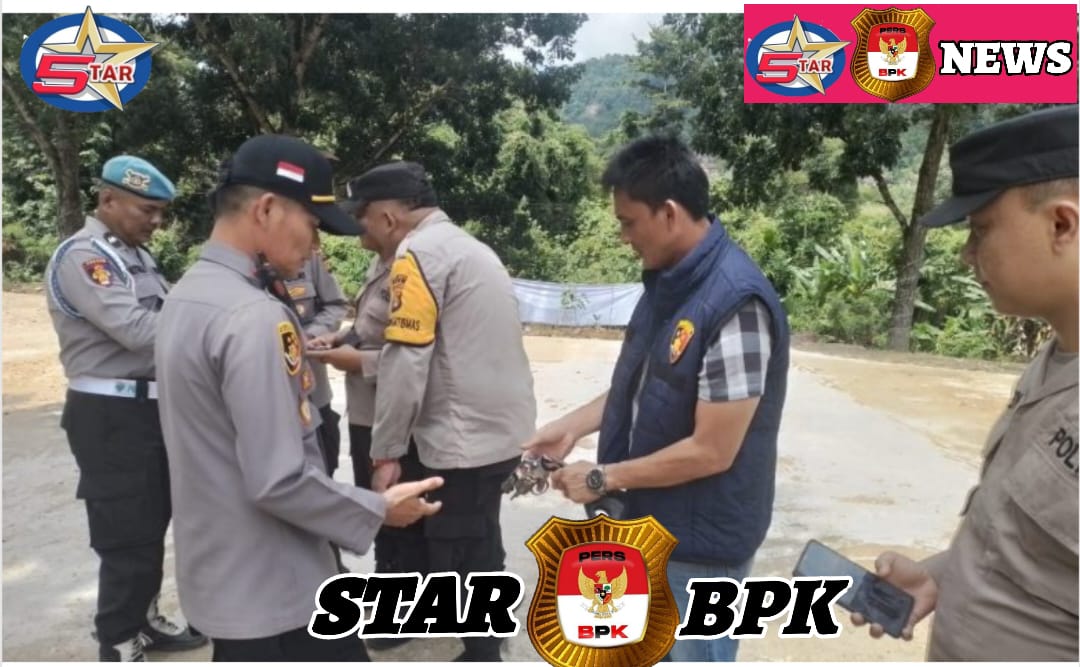
During the protest, a joint security team comprising TNI, Polri (police), and Satpol PP (civil security) was deployed to secure the main access to the DPRD.
What does this role signify at a deeper level?
TNI did not merely appear as a “shield of the ruling elite,” but instead operated alongside the people, signaling a potentially genuine humanistic approach.
Security operations were guided by Standard Operating Procedures (SOP) emphasizing non-violence and freedom of expression.
This moment reflects that TNI can function as a partner in democratic dialogue, not just as an enforcer.
4. A National Pattern: Consistency or Coincidence?
Looking beyond Inhil, similar approaches were observed nationally:
Jakarta, August 29, 2025: TNI AU’s Pasgat Paratrooper Brigade I deployed 579 soldiers to maintain order during demonstrations in central Jakarta, using a humanistic approach that even allowed citizens to interact freely with military vehicles.
August 30, 2025: TNI Commander General Agus Subiyanto urged the public to avoid provocation and stressed that the presence of TNI is to protect, foster a sense of safety, and maintain unity.
August 25, 2025, Senayan DPR Complex: Deputy Speaker of the House Ahmad Sahroni commended TNI and Polri for being firm yet humane, maintaining peace while safeguarding the right to protest.
Analysis:
There is a clear pattern emerging: TNI appears to be adopting a nationally coordinated humanistic approach, rather than this being an isolated, local phenomenon.
5. Critical Lens: Image Management or True Democratic Commitment?
a. Image Crafting Potential
TNI’s presence during demonstrations carries a strong potential for image-building: portraying the military as protectors of the people rather than suppressors. The critical question is: Is this substantive change or a strategic façade?
b. SOP Versus Reality
Humanistic guidelines on paper do not always translate to the ground. Independent reviews are limited, and human rights watchdogs rarely have full access to evaluate each operation.
c. Provocation and Surveillance
TNI’s intelligence role, as seen in Inhil where attempts at provocation were reportedly detected, suggests a dual function: security provider and political monitor. While this can be beneficial, it also risks sliding into preemptive censorship.
d. Equality of Treatment
Is this humane approach universal? Or is it selectively applied depending on the group protesting—students, workers, farmers, or political activists? Further comparative study is required.
6. Sharp Conclusion
From the data — Inhil (Tembilahan), September 8, 2022, 09:00 a.m., student-led fuel price protest — TNI demonstrated a people-centered role.
However, this consistent pattern does not automatically guarantee genuine democratic evolution. The path toward a truly people’s military requires:
1. Internalizing humanistic principles across all TNI levels.
2. Transparency in operational reports and human rights assessments.
3. Open dialogue between government, TNI, and civil society.
4. Independent monitoring, ensuring SOPs are faithfully implemented.
7. Recommendations: Moving Forward
Investigative Journalism: Collect testimonies from protesters and TNI officers on the ground.
Public Forums: Encourage public discussion on the transparency of military involvement in civil affairs.
Academic Research: Analyze TNI’s role in demonstrations historically and compare it regionally.
Embodying Humanism as a Culture
In the end, the phrase “TNI Merakyat” (The People’s Military) should not remain a mere slogan. It must evolve into a culture of protection and respect, not a performance for public approval.
As journalists, observers, and citizens, our responsibility is to monitor, evaluate, and hold this principle accountable—to ensure that the Indonesian military serves its people, not the other way around.
(Idham rizal)